Seeing Your Hotel Through a Stranger's Eyes: The Case for Immersive, Role-Based Quality Audits

The Checklist Is Not the Experience
Every hotel has an inspection process. Housekeeping supervisors walk rooms with clipboards. General managers review linen fold angles and soap placement. Department heads sign off on opening procedures. These routines exist for good reason — consistency matters, and standards must be enforced.
But here is the problem: a checklist measures what the hotel intends to deliver. It does not measure what the guest actually receives.
The distance between those two things is where reputation damage lives. A room can pass a full housekeeping inspection at 9:00 a.m. and still feel cold, dimly lit, and faintly musty when a guest checks in at 3:00 p.m. A lobby can be spotless and still confuse a first-time visitor who cannot locate the elevator bank. A breakfast service can be fully staffed and still feel chaotic to someone navigating it alone for the first time.
Standard audits are designed to catch deficiencies within the hotel's own operational framework. They are not designed to surface the friction points that emerge when a real person — unfamiliar with the property, carrying luggage, perhaps tired from travel — moves through your building for the first time.
That distinction is costing American hotels more than most leadership teams recognize.
What Role-Based Audits Actually Involve
The concept is straightforward, though the execution requires discipline. A member of the management team — or an outside consultant engaged for exactly this purpose — books a room as a standard paying guest, under an assumed name if necessary, and proceeds through the entire guest journey without announcing their presence or invoking their authority.
They arrive at the front entrance and notice whether the approach is intuitive. They stand in the check-in line and observe how long it takes, how the desk agent communicates, and whether any part of the process feels transactional rather than welcoming. They take the elevator, find the room, attempt to connect to the Wi-Fi, adjust the thermostat, and navigate the in-room amenities without the benefit of a staff orientation.
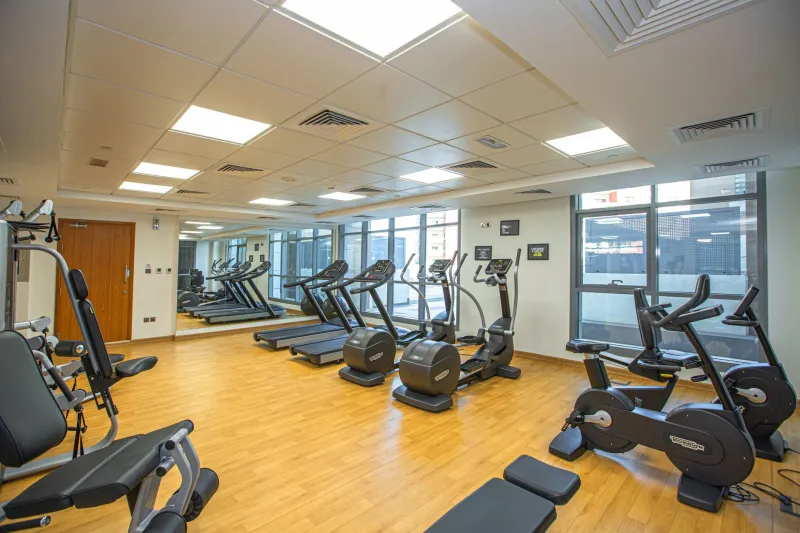
The following morning, they experience breakfast, attempt to use the fitness center, and eventually check out — again, as any guest would.
Throughout this process, they are documenting not just what went wrong, but what felt wrong. The distinction matters. A working thermostat that requires three steps to adjust is technically functional. To a guest who is already frustrated by a delayed check-in, it is one more obstacle. Role-based audits capture the cumulative weight of minor frictions that compliance-focused inspections never see.
The Blind Spots Standard Inspections Consistently Miss
Properties that have adopted immersive audit programs tend to uncover the same categories of issues, regardless of brand affiliation or property tier.
Wayfinding and spatial logic are among the most commonly cited problems. Hotels are often designed by people who know the building intimately. Signage that seems obvious to staff can be genuinely confusing to someone navigating the property for the first time, particularly in older buildings where additions and renovations have created irregular layouts.
Temperature and environmental consistency is another frequent finding. HVAC systems that perform adequately according to engineering standards often produce rooms that feel noticeably different from what guests expect — too warm on upper floors, too cold near exterior walls, slow to respond when guests arrive after a long day of travel.
Communication gaps at transition points — the moments when one department hands a guest off to another — are almost universally underperfoming. The handoff between the front desk and the bellstaff, between housekeeping and the room being ready, between the restaurant and the in-room dining team, these transitions are rarely observed from the guest's perspective during a standard audit. Role-based audits reveal how often they feel disjointed.
Digital friction has become an increasingly prominent finding as more guests attempt to use hotel apps, smart-room controls, and streaming integrations. What works flawlessly on a developer's test device frequently underperforms on a guest's personal phone, connected to the hotel's network, in a room at the far end of the building.
Building the Audit Into Operational Rhythm
For immersive audits to generate lasting improvement rather than one-time observations, they must be structured as a recurring program rather than an occasional exercise.
Leading properties are integrating role-based audits into their quarterly operations calendar, rotating responsibility among department heads so that the front office manager eventually experiences the property the way a housekeeping guest does, and vice versa. Cross-departmental perspective is essential — the person best positioned to identify a problem in the guest journey is often someone whose daily work does not touch that part of the experience.
Documentation protocols matter as well. Audit findings should be recorded in a standardized format that allows leadership to track whether identified issues have been resolved and whether new ones have emerged. Without that structure, immersive audits risk becoming anecdotal conversations rather than operational intelligence.
Some multi-property operators are going further, engaging external consultants to conduct role-based audits at each location on a rotating basis. The advantage of an outside perspective is significant — an experienced hospitality consultant arrives with no institutional familiarity with the property, no knowledge of which elevator is fastest, no awareness of the quirks that long-tenured staff have unconsciously accommodated. They experience the hotel the way a genuinely new guest does, and they document it accordingly.
The Organizational Resistance to Honest Self-Assessment
It would be incomplete to discuss immersive audits without acknowledging why more hotels do not conduct them. The honest answer is that they are uncomfortable.
When a general manager checks into their own property and finds the lobby difficult to navigate, the check-in process impersonal, and the room temperature inconsistent, they are confronting evidence that the guest experience they believed they were delivering does not fully match reality. That is a difficult thing to sit with, and it can create tension with department heads who have been assuring leadership that their areas are performing well.
But the discomfort of an internal audit is considerably less expensive than the alternative. Guests who encounter friction do not typically submit detailed feedback reports explaining exactly what went wrong. They leave. They post reviews. They choose a competitor the next time they visit the city.
The properties that are winning on guest satisfaction scores in competitive American markets are not simply the ones with the highest budgets or the newest amenities. They are the ones whose leadership teams have committed to seeing the property honestly — through the eyes of someone who has never been there before and may never return if the first impression falls short.
Role-based audits are among the most direct tools available for developing that honest perspective. The investment is modest. The findings are almost always significant. And the operational improvements they generate tend to surface in the metrics that matter most — guest satisfaction scores, return visit rates, and the online reputation that increasingly determines where travelers book in the first place.