The Hidden Amenity Problem: When Premium Features Go Unnoticed and What That Silence Is Costing You
The Investment That Guests Walk Past
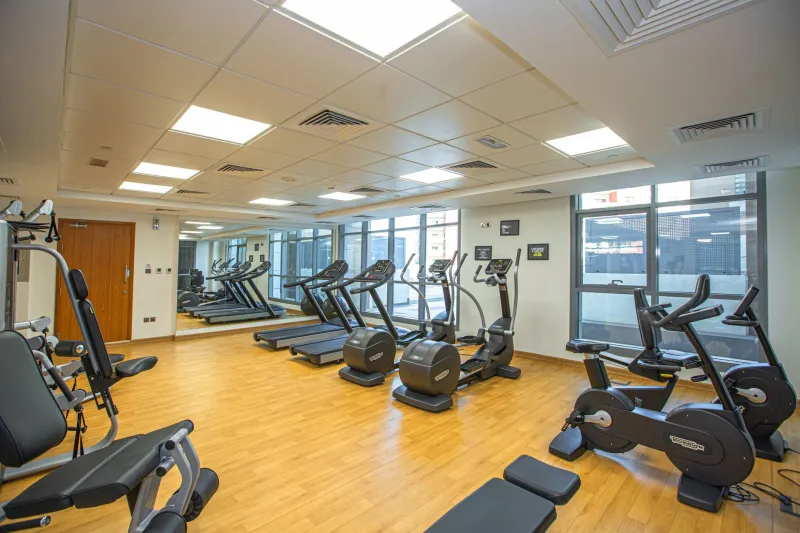
The fitness center was renovated two years ago. New equipment, improved lighting, a curated playlist system. The business lounge was redesigned with high-speed fiber, ergonomic seating, and complimentary specialty coffee. The guest rooms were upgraded with premium mattress toppers, blackout drapery, and in-room tablets offering on-demand services.
And yet, at checkout, guests routinely indicate they were unaware that any of these features existed.
This is not an uncommon finding. Across properties that Ascend Hospitality has assessed, one of the most consistent operational gaps is the disconnect between what a hotel offers and what its guests actually discover. The capital has been spent. The amenities are in place. But the communication infrastructure to make those amenities visible—and used—has not received comparable investment. The result is a form of silent revenue erosion that appears nowhere on a financial statement but manifests clearly in guest satisfaction scores, in online reviews that describe the property as "fine but unremarkable," and in the inability to justify premium rate positioning against competitors.
Why Amenities Disappear
Understanding why guests miss available amenities requires examining the structural conditions that allow it to happen.
The most common culprit is departmental siloing. In many properties, the team responsible for managing the fitness center operates independently of the front desk, which operates independently of housekeeping, which has limited interaction with food and beverage. Each department knows its own offerings thoroughly. None has a consistent mechanism for ensuring that guests know what all departments collectively provide.
The result is a guest experience that resembles an unguided tour of a city with no map. A guest checking in at 9 p.m. after a long flight receives a room key and a brief orientation to the elevator bank. The associate at the desk is managing a queue and following a script that covers the essentials: Wi-Fi password, breakfast hours, checkout time. The business lounge on the fourth floor is not mentioned. The complimentary morning fitness class is not mentioned. The in-room tablet that allows guests to request items from housekeeping without calling the front desk is not mentioned—and in many cases, the tablet itself is tucked behind the television, where it will remain for the duration of the stay.
A second structural problem is the assumption that guests will explore. Hotel teams, who know their properties intimately, often underestimate how unfamiliar and cognitively demanding a new environment is for a guest. Arriving travelers are managing luggage, processing spatial information, and often operating on disrupted schedules. They are not primed to discover. They are primed to settle. Amenities that require a guest to seek them out will, for a significant portion of the guest population, go unfound.
Finally, there is the digital gap. Many properties have invested in apps, in-room tablets, or digital compendiums without building the operational habits that make those tools effective. A digital amenity guide that is not referenced by staff, not mentioned at check-in, and not visible in the room becomes another invisible offering—this time in electronic form.
The Revenue Consequence of Invisible Amenities
The business case for amenity visibility extends well beyond guest satisfaction metrics, though those matter considerably. When guests fail to engage with premium features, several revenue-related consequences follow.
First, the property's rate positioning becomes harder to defend. A guest who pays a premium rate but perceives the experience as equivalent to a mid-scale competitor is a guest who will not return at that rate—and may not return at all. Amenities that justify premium pricing must be experienced, not merely available, to perform that function.
Second, ancillary revenue opportunities are missed. A guest who discovers the in-room dining menu on day three of a five-day stay has lost two days of potential orders. A guest who never learns that the property offers a late checkout option for a modest fee never has the opportunity to purchase it. These are not hypothetical losses; they are measurable gaps between actual and potential revenue per occupied room.
Third, review quality suffers in ways that are difficult to recover from. A guest who checks out having used only the bed and the shower writes a review that reflects a bed-and-shower experience. That review influences future guests' expectations and booking decisions. Properties with strong amenity visibility consistently generate richer, more detailed reviews that reinforce their positioning and differentiate them in search results.
Closing the Visibility Gap: A Practical Framework
Addressing the amenity visibility problem requires intervention at multiple points in the guest journey. No single tactic is sufficient; the solution is layered.
Redesign the check-in conversation. The front desk interaction is the highest-attention moment of a guest's arrival. It is also the moment most likely to be compressed during busy periods. Properties that build structured amenity mentions into the check-in script—not as a recitation, but as a personalized, brief orientation—consistently see higher amenity engagement. Training staff to read the guest's profile (business traveler, leisure couple, extended stay) and tailor the mention accordingly is more effective than a generic rundown. "Given that you're here for four nights, you may want to know that our fitness center has complimentary morning classes at 7 a.m." lands differently than "The gym is on the third floor."
Use physical space intentionally. In-room signage remains one of the most underutilized communication tools in hospitality. A well-designed card on the nightstand, a tasteful placard near the in-room coffee station, or a brief welcome note from management that highlights two or three specific amenities can shift guest behavior meaningfully. The key is restraint: a cluttered room with twelve different promotional materials communicates nothing. A single, well-placed piece that highlights the property's most distinctive offering communicates one thing clearly.
Activate the mid-stay touchpoint. The moment between check-in and checkout is largely uncontested territory in most properties. A mid-stay message—delivered via text, email, or in-room tablet—that surfaces an amenity the guest has not yet used represents a low-cost, high-return engagement opportunity. "We noticed you haven't had a chance to visit our business lounge yet—it's available until 10 p.m. tonight" is both helpful and revenue-generating.
Train for cross-departmental advocacy. Every guest-facing employee should be able to speak knowledgeably about every guest-facing amenity. A housekeeping associate making up a room at 10 a.m. who notices a guest's workout clothes can mention the fitness center's afternoon availability. A room service delivery creates a natural moment to reference the in-room dining menu's evening specials. These interactions require cross-training investment, but the return—in engagement, in ancillary revenue, in guest satisfaction—justifies it.
Audit your digital tools regularly. If your property uses an app or in-room tablet, conduct a quarterly review of which features guests are actually accessing. Low engagement with a specific amenity listing may indicate a content problem, a placement problem, or a staff-referral problem. Treat digital tool analytics as operational data, not a technology metric.
What Guests Perceive Is What You Deliver
Premium amenities earn their return when guests use them. When they do not, the capital investment sits inert, the rate positioning weakens, and the guest departs with a perception of the property that does not reflect its actual offering.
The properties that close this gap do not necessarily invest more in amenities. They invest in the systems and habits that make their existing amenities visible. At Ascend Hospitality, we have seen properties achieve meaningful improvements in guest satisfaction scores, ancillary revenue, and online review quality without adding a single new feature—simply by ensuring that guests actually found the features already there.
The amenity is only half the equation. The communication is the other half. Both require deliberate management.