Before the Coffee Cools: The Early-Morning Signals Every Hotel GM Should Be Reading

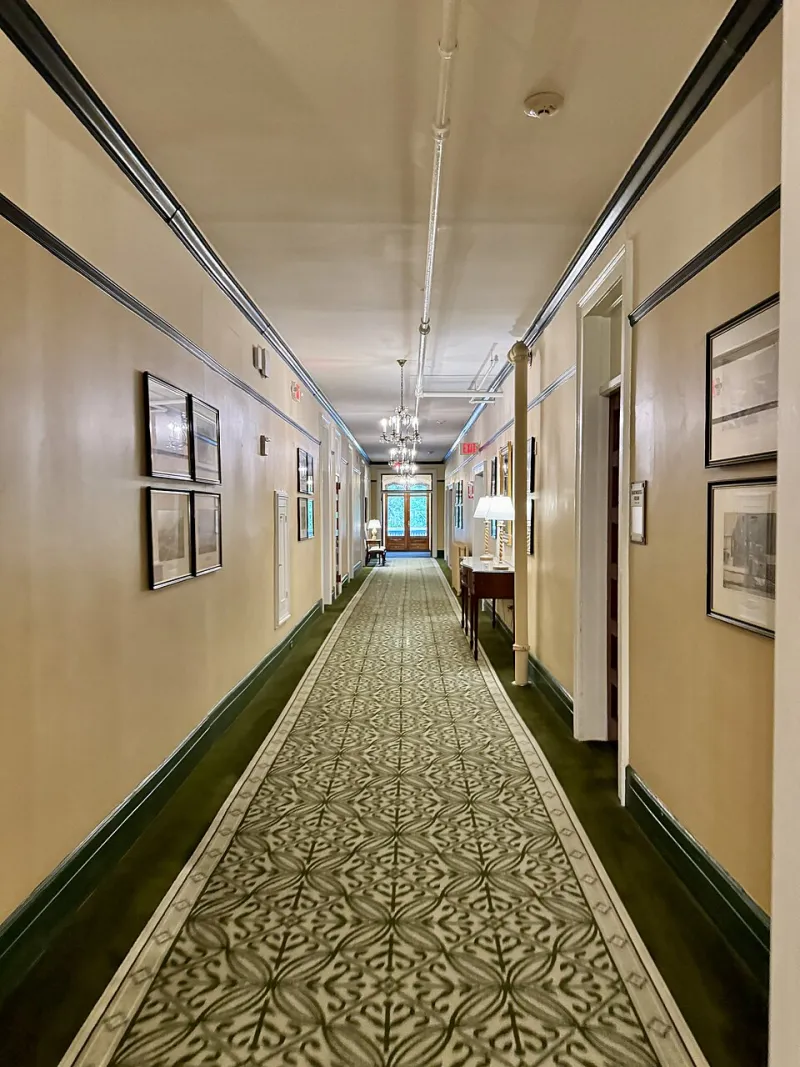
Photo: Fabiovieiramd, CC BY-SA 4.0, via Wikimedia Commons
There is a window of time in every American hotel — roughly between 5:30 and 7:30 a.m. — when the property tells the truth. The night crew is winding down, the day shift is finding its rhythm, and the guest is at their most unguarded. General managers who treat this window as a reporting exercise miss it entirely. Those who treat it as an audit catch problems weeks before they surface in a review score.
What follows is a practical framework, drawn from the habits of consistently high-performing GMs across the U.S. market, for reading your property before the coffee cools.
Start With the Arrival, Not the Office
Resist the pull of the back office. Walk in through the front entrance — the same entrance a guest would use — and give yourself ninety seconds of honest observation.
- Is the door hardware clean and functioning? A sticky door closer is a small thing a guest notices every single time they smoke or take a call outside.
- What does the lobby smell like at 6:15 a.m.? Overnight odors — cleaning chemicals, stale air, last night's banquet — linger precisely because nobody on the day shift has noticed them yet.
- Are the sightlines clear? Can you see from the entrance to the front desk to the elevator bank without obstruction? Cluttered sightlines correlate with cluttered operations.
Read the Overnight Log Like a Detective, Not a Judge
Before you walk the floors, read the night audit and the shift-pass notes. But read them for patterns, not incidents.
One noise complaint is noise. Three complaints from adjacent rooms across four consecutive nights is a floor-level problem — possibly a renovation issue, possibly a group booking, possibly a housekeeping assignment pattern. High-performing GMs ask: what does this log tell me about the next seven days?
Pay particular attention to what the night team flagged and nobody responded to. Unacknowledged overnight notes are one of the most reliable early indicators of a communication breakdown between shifts.
The Breakfast Line Is Your Best Focus Group
No survey instrument in the industry outperforms thirty minutes of standing near the breakfast service during peak flow. You will learn more about your property in that half hour than in a month of TripAdvisor monitoring.
Watch for these tells:
- Replenishment lag. Count how long an empty tray stays empty. If it exceeds three minutes during rush, your par levels or your staffing ratio are wrong — not your attendant.
- Chatter clusters. Guests traveling together talk about their stay within earshot of the buffet. Listen for the words "again," "still," and "supposed to."
- The waffle iron effect. Every U.S. property has one bottleneck item — the waffle iron, the single toaster, the one working espresso machine. It is a visible, daily lesson in capacity planning that most managers walk past 300 times a year.
Walk One Vertical Path, End to End
You don't need to tour all ten floors. Pick one — ideally the floor with your highest occupancy — and walk it from the elevator to the farthest guest room, including the ice machine alcove, the vending area, and the housekeeping closet on that floor.
What you're auditing is drift: the slow accumulation of small failures that happen when no one with authority looks. The scuffed corner. The ice machine with a handwritten "out of order" sign dated Tuesday. The linen cart parked in the egress path. Each one is trivial in isolation. Together they describe a management cadence.
Close the Loop Before 9 a.m.
The difference between a walkthrough and an audit is follow-through. Elite GMs convert their morning observations into three to five specific, assigned actions before the daily stand-up. Not a list — an assignment. "Marcus, the ice machine on 4 has been down since Tuesday; get me a repair confirmation by noon" outperforms any memo.
Make It a System, Not a Mood
The morning ritual only compounds in value when it's structured. Build a simple daily checklist — arrival sightlines, overnight log review, breakfast observation, one floor walk, three assigned actions — and rotate the floor you audit each day. Within two weeks, you'll have covered the entire property without adding a single labor hour.
The sun will come up either way. The question is whether your operation is ready to read what it illuminates.