Why the Same Room Never Feels the Same Twice: The Hidden Cost of Inconsistent Housekeeping Workflows
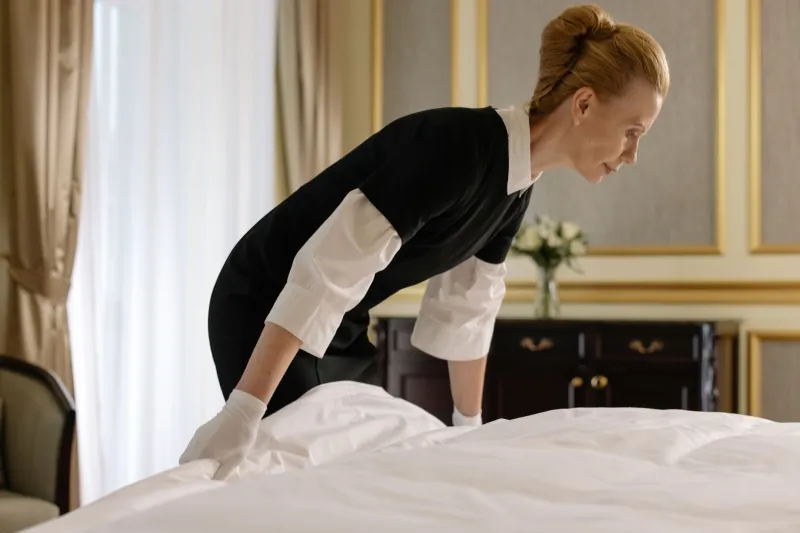
Ask any hotel general manager whether their housekeeping standards are consistent, and most will say yes. Ask a guest who has stayed at the same property three times in a year, and the answer is frequently more complicated. The towels were folded differently. The amenities were arranged in a different order. One stay, the remote was wiped down and placed neatly on the nightstand. The next, it was buried under the duvet.
These are not trivial complaints. In an industry where the physical room is the core product, inconsistency is a form of quality failure — one that rarely appears on a spreadsheet, yet quietly shapes guest perception, review scores, and return visit decisions. For hotel operators managing multiple properties or large room inventories, the problem compounds in ways that are difficult to trace back to a single cause.
The uncomfortable truth is that most housekeeping inconsistency does not stem from laziness or indifference. It stems from the absence of documented, measurable, and transferable process standards.
The Invisible Workflow Problem
In many American hotels, housekeeping procedures exist primarily as institutional memory — passed from one attendant to another through informal training, side-by-side observation, and verbal instruction. A veteran room attendant who has worked the same floor for four years carries an enormous amount of operational knowledge that has never been written down. She knows that the corner suites require an extra pillow arrangement. She knows that the bathroom mirror in rooms 412 through 418 has a particular angle that catches lint if it isn't wiped in a specific direction. She knows which amenity configurations the property manager prefers for VIP arrivals.
When she leaves — and in an industry with annual turnover rates that routinely exceed 70 percent, she will leave — that knowledge walks out with her. The replacement attendant works from a general orientation and whatever fragments of guidance a supervisor has time to offer during a busy shift. The room gets cleaned. But it does not get cleaned the same way.
This is the housekeeping shuffle: a constant rotation of personnel carrying incomplete process knowledge, producing rooms that technically pass inspection but diverge in dozens of small, cumulative ways that guests notice even when they cannot articulate why.
Why Standard Operating Procedures Often Fall Short
Many properties do maintain written SOPs for housekeeping. The problem is that most of these documents were created once, reviewed infrequently, and have not kept pace with changes in room configurations, product inventory, or brand standards. They describe what to clean, but rarely how — and almost never in enough detail to produce a genuinely consistent output.
A checklist that says "clean bathroom" is not a process standard. A process standard specifies the sequence of tasks, the products used at each step, the visual outcome expected, and the time allocation required. The difference between those two things is the difference between a room that meets the minimum threshold and a room that reliably delivers on your brand promise.
There is also the question of who reviews these documents and when. In properties where supervisors are stretched thin — covering multiple floors, managing linen logistics, and fielding guest requests simultaneously — the SOP binder on the housekeeping office shelf is rarely consulted. It becomes a compliance artifact rather than an operational tool.
Building a Consistency Framework That Scales
Addressing housekeeping inconsistency requires more than revising a checklist. It requires building a documentation and measurement system that is embedded in daily operations rather than layered on top of them.
Step one is process decomposition. Break each room type into its component tasks and document each one at a granular level. This is not a quick exercise. It requires working directly with your most experienced housekeeping staff to capture the institutional knowledge they carry, translating it into written and visual formats that a new hire can follow on day one. Photographs, short video walkthroughs, and annotated diagrams are far more effective than text-only descriptions for conveying spatial and tactile standards.
Step two is sequencing. Consistency is partly a function of order. When attendants approach a room in a standardized sequence — same starting point, same task progression, same exit check — the probability of missed steps drops significantly. Sequenced workflows also make it easier to identify where errors are occurring when a room does fall short of standard.
Step three is objective measurement. Mystery shops and supervisory walkthroughs have their place, but they are expensive, infrequent, and inherently subjective. A more scalable approach is to build quality verification into the workflow itself through structured digital inspection tools. Room attendants and supervisors complete inspections using a standardized digital form — one that captures specific, observable conditions rather than general impressions. Over time, this data reveals patterns: which room types generate the most flags, which shifts produce the highest error rates, which specific tasks are most frequently missed.
Several property management and housekeeping software platforms available to US operators today offer this functionality, and the investment is typically recoverable within a single quarter through reduced rework, fewer guest complaint credits, and improved review scores.
Step four is feedback integration. Guest feedback — whether collected through post-stay surveys, OTA reviews, or direct communication — should be systematically cross-referenced with housekeeping inspection data. If a guest flags a cleanliness issue in room 507 on a Tuesday, the question is not only what went wrong in that room. It is whether the inspection record for that room on that day shows any anomalies, and whether similar patterns exist for other rooms serviced by the same attendant or during the same shift.
This kind of data integration is what separates reactive quality management from preventive quality management.
The Multi-Property Dimension
For operators managing hotels across multiple locations — a growing segment of the US hospitality market — housekeeping inconsistency takes on an additional dimension. Guests who stay at your brand in Chicago and then again in Nashville expect a comparable experience. When the room preparation standards differ materially between properties, it is not just a housekeeping problem. It is a brand coherence problem.
Building a centralized process library that individual properties adapt within defined parameters — rather than each location developing its own informal standards — is one of the most effective tools available to multi-property operators. It preserves local flexibility where appropriate while ensuring that core quality standards are non-negotiable and consistently applied.
Consistency Is a Competitive Asset
In a market where guests have more options and more information than ever before, the properties that build reputations for reliability — for delivering the same high-quality experience on visit three as on visit one — hold a meaningful competitive advantage. That reliability is not an accident. It is the product of deliberate process design, rigorous documentation, and measurement systems that treat room quality as an operational metric rather than a subjective impression.
The housekeeping shuffle is a solvable problem. But solving it requires acknowledging that the knowledge gap is real, the documentation gap is real, and the measurement gap is real — and that addressing all three is an investment in the most fundamental product your hotel sells.